translate English
 پارسی
English
Englishپارسی
English
Englishپارسی EnglishپارسیEnglishپارسی
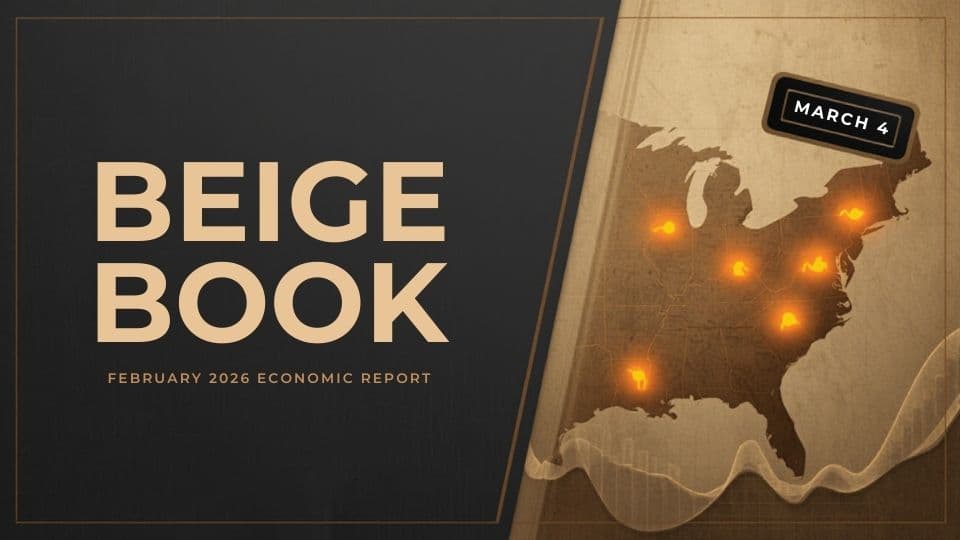
The Federal Reserve’s February 2026 Beige Book signals a modest, uneven expansion: activity rose in 7 of 12 districts, while more areas reported flat or declining momentum. Consumers are spending cautiously amid economic uncertainty and price sensitivity, even as manufacturing improves on stronger new orders tied to data centers and energy infrastructure. This post breaks down the report itself and what the report implies for growth, demand, credit, housing, and the near-term macro outlook.
The latest minutes from the January 27–28 FOMC meeting (released February 18) show a committee that is comfortable staying on hold after last year’s easing—but increasingly explicit that the next move is not predetermined. Policymakers broadly described the economy as still expanding at a solid pace, a labor market that is cool but stabilizing, and inflation that is still somewhat elevated, with the inflation story complicated by tariff-driven core goods pressure and data distortions linked to the government shutdown.
Conditions improved: 8 of 12 Districts saw slight-to-modest growth, 3 were flat, 1 declined. Holiday spending lifted activity—strongest among higher-income consumers (luxury/travel/experiences) while lower- to middle-income households turned more price-sensitive. Autos were flat-to-down. Manufacturing was mixed (5 up, 6 down) and services were steady to slightly firmer. Banking was stable/improving with some pickup in consumer and commercial credit. Housing softened across most Districts. Agriculture was mostly unchanged (Atlanta slightly weaker on exports) and energy was flat-to-down. Outlook: mildly optimistic for slight-to-modest growth ahead.
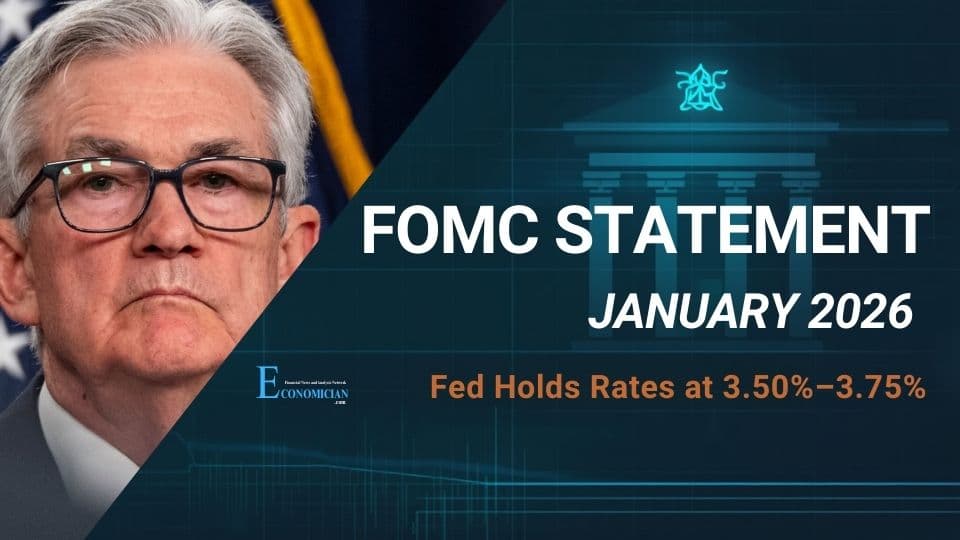
In the January 2026 standard FOMC meeting statement, the Federal Reserve kept the federal funds target range unchanged and updated its assessment of growth, employment, and inflation. The statement also reiterated a data-dependent approach and highlighted risks shaping the policy path—making it a key guide for rate, USD, and broader market expectations.
The Federal Open Market Committee unanimously reaffirmed its “Statement on Longer-Run Goals and Monetary Policy Strategy” at its annual organization meeting, underscoring continuity in the Fed’s policy framework. The reaffirmed statement is identical to the version adopted in August 2025.
Davos 2026 (19–23 January) closed with a notably hard-edged backdrop: geopolitical brinkmanship, trade weaponization, and AI-driven economic disruption dominated the conversations more than “classic” globalization optimism. The World Economic Forum said the meeting hosted a record 400 top political leaders, including nearly 65 heads of state/government, across roughly 200 sessions and workshops—and framed the week explicitly around restoring “dialogue” in a more contested world.
The mid-week Davos review highlights how the 2026 World Economic Forum struggled to foster genuine cooperation in an era of escalating geopolitical tensions. Day 1 set a hopeful tone with an AI-infused concert and Swiss President Guy Parmelin’s call for unity and responsible innovation. However, the themes of fragmentation quickly surfaced when Canadian Prime Minister Mark Carney declared the rules-based order in “rupture,” urging middle powers to stop “living within the lie” and forge a new architecture of resilience.
The Office of Foreign Assets Control (OFAC) is a division of the U.S. Department of the Treasury responsible for administering and enforcing U.S. economic and trade sanctions. In practice, OFAC sanctions are one of Washington’s primary policy tools for responding to threats tied to national security, foreign policy, and the protection of the U.S. financial system.
The ECB kept rates unchanged on December 18, 2025, while staff projections show inflation converging to 2% over the medium term and euro area growth revised higher—alongside continued APP/PEPP runoff and a reaffirmed data-dependent approach.
The Bank of Japan updated its money market operations guidance, steering the overnight call rate around 0.75% and setting key facility rates effective December 22, 2025, while signaling scope for further gradual tightening if its Outlook baseline is realized.
Oil Market Highlights from the OPEC Monthly Report (December 2025): crude benchmarks softened in November, the global growth outlook stays steady, oil demand growth forecasts remain resilient into 2026, while product markets, tankers, and OECD stock dynamics provide important near-term signals.
The Federal Reserve Board and FOMC have published their updated economic projections from the December 2025 meeting, revealing new forecasts for growth, inflation, unemployment, and future interest-rate policy. This post highlights the key changes in the outlook and explains what the updated projections mean for financial markets and the policy path ahead.